Many people suffer from unknown
Magnesium deficiency. This can lead to problems such as muscle cramps and cardiovascular disease.rnrnEin
Magnesium supplement can help to supply the body with magnesium. Magnesium is important for energy production and the nervous system.rnrn

rnrnThe right magnesium supplement can improve your health. It helps to alleviate discomfort. So choose the best supplement for the best effect.rn
Important findings
rn
rn - A Magnesium deficiency can cause serious health problems.
rn - A Magnesium supplement can help to compensate for this deficiency.
rn - The best magnesium supplement supports health and alleviates discomfort.
rn - Magnesium is involved in many bodily processes.
rn - Choosing the right preparation is crucial for the optimum effect.
rn
rn
The importance of magnesium for the body
rnMagnesium is very important for our health. It helps our body to function well. It is important for many important processes in the body.rn
Basic functions of magnesium in the organism
rnMagnesium is very important for the body. It helps with energy production, the functioning of the nervous system and muscle function.rn
Role in energy production
rnMagnesium is important for energy in the body. It helps to produce energy. Without enough magnesium, we feel tired and exhausted.rn
Significance for the nervous system and muscle function
rnMagnesium is important for nerves and muscles. It helps to prevent muscle cramps and transmit nerve impulses.rn
Magnesium as a cofactor for over 300 enzymes
rnMagnesium helps with over 300 reactions in the body. It supports protein synthesis, DNA repair and glucose metabolism. This is how it supports health.rnrnhttps://www.youtube.com/watch?v=TPlR1M2rbHgrnrnThe right
Magnesium dosage is important. This is how we cover our daily
Magnesium requirement and support our health.rn
Recognize signs of magnesium deficiency
rnEin
Magnesium deficiency can have a major impact on health. It can disrupt many aspects of well-being.rn
Common symptoms of magnesium deficiency
rn
Magnesium deficiency manifests itself through many symptoms. These can be physical and psychological.rn
Physical signs
rnPhysical symptoms of a magnesium deficiency are
Muscle cramps,
Tiredness and
Cardiac arrhythmia. Magnesium is important for muscle and nerve function.rn
Psychological symptoms
rnPsychological symptoms include
States of anxiety,
Depression and
Irritability. A magnesium deficiency affects the production of neurotransmitters that control mood.rnrn

rn
Risk groups for magnesium deficiency
rnCertain groups are more at risk. These include
Athlete,
People with chronic illnesses and
People with an unbalanced diet.rn
rnrnrn| Risk group | rnReasons for magnesium deficiency | rn
rnrn| Athlete | rnIncreased magnesium loss through sweating | rn
rnrn| People with chronic illnesses | rnMedication and illnesses that impair magnesium absorption | rn
rnrn| People with an unbalanced diet | rnInsufficient magnesium intake through food | rn
rnrn
rnIt is important to know these risk groups. In this way, magnesium deficiency can be prevented or treated.rn
Why a magnesium supplement can be useful
rnSometimes the magnesium intake from the diet is not sufficient. In such cases, a
Magnesium supplement be a good addition.rnrnOur diet is often poor in magnesium. Many foods are highly processed and contain less magnesium. The magnesium content in food can also decrease due to intensive farming and long storage periods.rn
Modern eating habits and magnesium deficiency
rnOur diet has changed dramatically. Many eat more processed foods that contain little magnesium.
Magnesium-rich foods such as green leafy vegetables, nuts and seeds are often not eaten enough.rnrnIntensive agriculture can reduce the magnesium content in soils. This leads to less magnesium in our food.rnrn
rn
Situations with an increased magnesium requirement
rnThere are situations in which the body needs more magnesium. This applies to intensive sport, stress and chronic illnesses.rn
Intensive physical activity
rnAthletes need more magnesium. Magnesium helps with
Energy production and muscle relaxation. A supplement can improve performance and prevent muscle cramps.rn
Stress and chronic illnesses
rnStress and chronic illnesses increase the need for magnesium. A supplement can stabilize the magnesium balance and reduce the
Improve stress resistance.rnrnEin
Magnesium supplement is therefore important for health and performance, especially when there is an increased need.rn
Comparison of different types of magnesium supplements
rnThere are many magnesium supplements to choose from. Each form has its own benefits and properties. It is important to know the differences.rn
Magnesium citrate, glycinate and malate
rn
Magnesium citrate is very popular because of its
good bioavailability. It helps to absorb magnesium better.
Magnesium glycinate has a calming effect on the nervous system. Magnesium malate is also readily available and a good alternative for some people.rnrnThese three forms are characterized by their
high bioavailability are in great demand. They help to increase the magnesium level in the body.rn
Magnesium oxide, chloride and sulphate
rn
Magnesium oxide is often used, although it is less bioavailable than other forms. It is inexpensive and is used in dietary supplements. Magnesium chloride and magnesium sulphate are used in various applications, including topically such as in baths.rnrn
rn
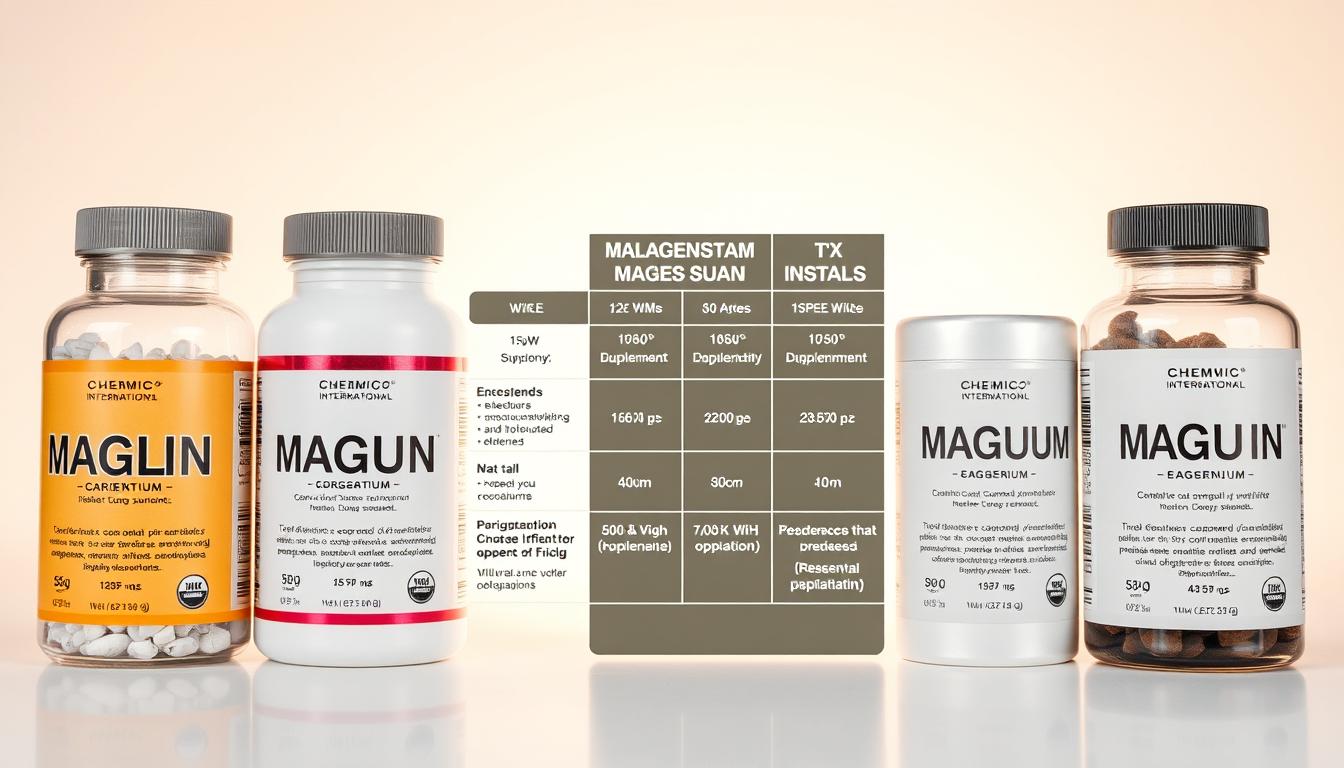
Bioavailability of various magnesium compounds
rnBioavailability is important when choosing a magnesium supplement.
Magnesium citrate and magnesium glycinate are very readily available.
Magnesium oxide is less available. The right connection depends on needs and compatibility.rnrnA doctor or nutritionist can help you find the best magnesium supplement.rn
Choose the best magnesium supplement
rnThere are many factors to consider when looking for a magnesium supplement. Here's how to find the best product for your needs.rn
Quality criteria for high-quality preparations
rnImportant quality features include purity and the absence of additives. Certifications and manufacturing standards are also important.rn
Purity and additives
rnThe purity of a
Magnesium supplements is very important. Impurities can reduce effectiveness and safety. Some products contain additives that can trigger allergic reactions in some people.rn
rn - Reinheit: Choose products that are free from heavy metals and other impurities.
rn - Additives: Check the ingredients to ensure that there are no undesirable additives.
rn
rn
Certifications and manufacturing standards
rnCertifications from independent third parties show that a product is of high quality. Compliance with strict manufacturing standards is also a good sign.rn
rn - Certifications: Look for certifications from organizations with rigorous testing procedures.
rn - Manufacturing standards: Products manufactured in accordance with GMP meet high quality standards.
rn
rn
Dosage forms: Tablets, capsules, powder and oils
rnMagnesium supplements are available in various forms. These include tablets, capsules, powders and oils. Each form has its own benefits and can be chosen according to need and preference.rnrn

rn
rn - Tablets and capsules: Convenient for daily intake and provide an accurate dosage.
rn - Powder: Can be easily mixed into drinks or food and is a good option for people who have difficulty swallowing tablets.
rn - Öle: Topical application for local magnesium absorption, ideal for muscle relaxation and pain relief.
rn
rn
Correct dosage of magnesium supplements
rnThe correct dosage of magnesium supplements is very important. Magnesium helps our body in many areas.rn
Daily magnesium requirement by age and gender
rnThe need for magnesium depends on age and gender. Men need about 400 mg daily, women about 310 mg.rn
rnrnrn| Age | rnMen (mg/day) | rnWomen (mg/day) | rn
rnrn| 19-25 years | rn400 | rn310 | rn
rnrn| 25-51 years | rn400 | rn310 | rn
rnrn| 51+ years | rn420 | rn320 | rn
rnrn
rn
Recommended intake for optimum effect
rnTo get the most out of magnesium supplements, it is important to take them correctly.
Magnesium dosage should be tailored to the individual.rn
Time of ingestion
rnMagnesium can be taken at any time. It is best taken with meals in order to
Magnesium intake to improve.rn
Distribution of the daily dose
rnIt is better to divide the daily dose into smaller doses. This way the
Magnesium requirement well covered.rnrn

rn
Optimization of magnesium absorption
rnThere are various ways of absorbing more magnesium. How well the body can absorb magnesium is very important. It helps it to utilize this important mineral.rn
Factors that influence absorption
rnThe way in which magnesium is absorbed depends on many factors.
Other nutrients play a major role. For example, vitamin D can help to better absorb magnesium.rnrnDie
Form of magnesium is also important. Different magnesium compounds are absorbed differently. This means that some forms are easier to absorb than others.rn
Nutrients that support magnesium utilization
rnSome nutrients help to make better use of magnesium in the body.
Calcium and
Vitamin D are examples of this. They have a positive effect on magnesium.rn
rn - Calcium: Supports bone health and interacts with magnesium.
rn - Vitamin D: Promotes magnesium absorption and utilization.
rn - Potassium: Supports the maintenance of the electrolyte balance.
rn
rnA balanced diet rich in these nutrients can help. This can improve magnesium absorption.rn
Magnesium for special needs
rnMagnesium is an important mineral. It not only helps general health. It also supports special needs in different phases of life.rn
Magnesium supplement for athletes
rnAthletes often need more magnesium. It is important for energy production and muscle function. A deficiency can lead to muscle cramps.rnrnMagnesium can improve performance. It also helps to prevent muscle cramps.rn
Magnesium during pregnancy and breastfeeding
rnDuring pregnancy and breastfeeding, the body needs more magnesium. It supports the health of mother and child. It can also prevent pregnancy complications.rnrnIt is important to consult a doctor before taking a magnesium supplement. This will ensure that the correct dosage is found.rn
Magnesium for stress and sleep problems
rnMagnesium can also help with stress and sleep problems. It relaxes the body and improves the quality of sleep. It also supports the production of melatonin.rnrnA study shows that magnesium can improve the quality of sleep. It also helps to alleviate stress and promote relaxation.rn
rnrnrn| Target group | rnMagnesium requirement | rnAdvantages of supplementation | rn
rnrn| Athlete | rnIncreased due to intensive physical activity | rnImproved performance, reduction of muscle cramps | rn
rnrn| Pregnant women and nursing mothers | rnIncreased to support the health of mother and child | rnPrevention of pregnancy complications, alleviation of pregnancy complaints | rn
rnrn| People under stress and with sleep problems | rnCan vary, often increased under stress | rnPromotes relaxation, improves the quality of sleep | rn
rnrn
rn
Possible side effects and interactions
rnMagnesium can have side effects and interactions if taken incorrectly. It is important to inform yourself about the risks. So you can take it safely.rn
Side effects of overdose
rnTaking too much magnesium can cause problems. The most common side effects includern
rn - Gastrointestinal problems such as diarrhea and abdominal pain
rn - Nausea and vomiting
rn - In severe cases, muscle weakness and heart problems may occur
rn
rnThe recommended dosage should not be exceeded in order to avoid these problems.rn
Interactions with medication and other nutrients
rnMagnesium can react with medications and nutrients. You should consult a doctor before taking it, especially if you are taking other medication.rn
Antibiotics and blood pressure medication
rnMagnesium can influence the effect of antibiotics and blood pressure medication. For example, it can impair the absorption of antibiotics.rn
Calcium and other minerals
rnTaking magnesium and calcium at the same time can affect the absorption of both. It is better to separate them in order to achieve the best absorption.rn
rnrnrn| Drug/Nutrient | rnPossible interaction | rnRecommendation | rn
rnrn| Antibiotics | rnImpaired absorption | rnStagger the intake | rn
rnrn| Blood pressure medication | rnIncreased effect | rnConsult a doctor | rn
rnrn| Calcium | rnInfluenced absorption | rnStagger the intake | rn
rnrn
rn
Conclusion: Magnesium as an important building block for your health
rnMagnesium is an important mineral for many bodily functions. It helps to improve health. A magnesium supplement can cover the daily requirement, especially if the diet does not provide enough magnesium.rnrnChoosing the right magnesium supplement is very important.
Magnesium citrateglycinate and malate are particularly easy to digest. The correct dosage depends on age and gender.rnrnMagnesium has many health benefits. It supports the heart, circulation and nervous system. It also helps with stress and sleep problems. A suitable magnesium supplement can improve your well-being.rnrnMagnesium is key to your health. With the right supplement, you can provide your body with an optimal supply. This will help you maintain good health in the long term.rn
FAQ
rn
What is the best magnesium supplement for me?
rn
The best magnesium supplement depends on your personal needs. Magnesium citrateglycinate and malate are popular. They are easy to digest.rn
How much magnesium do I need every day?
rn
The daily requirement for magnesium depends on age and gender. It is wise to follow the recommended dose. Sometimes it is good to ask a doctor.rn
Can I take magnesium together with other food supplements?
rn
Yes, this usually works. But watch out for interactions with other nutrients and medications. You should be particularly careful with calcium and other minerals.rn
What side effects can a magnesium supplement have?
rn
Too much magnesium can cause diarrhea and stomach cramps. Therefore, stick to the recommended dosage.rn
How can I optimize my magnesium intake?
rn
A balanced diet helps. Combining it with nutrients that make magnesium easier to absorb is also good.rn
Is a magnesium supplement useful for athletes?
rn
Yes, athletes can benefit from magnesium. It helps to prevent muscle cramps and increase performance.rn
Can I take magnesium during pregnancy and while breastfeeding?
rn
Yes, but ask a doctor first. That way you can make sure it's safe for mother and child.rn
How long does it take until I feel the effect of magnesium?
rn
The effect of magnesium varies according to need and dosage. It is better to take it over a longer period of time to achieve the best results.